Introduction
Google Ads can put a business in front of people at the exact moment they are searching for a product, service, solution, or local provider. But visibility alone does not guarantee profitable growth. Campaign structure, keyword intent, ad relevance, landing pages, conversion tracking, bidding, budgets, and continuous optimization all influence performance. This is where a specialized Google Ads agency can add value by turning paid search into a structured acquisition channel.
What Does a Google Ads Agency Do?
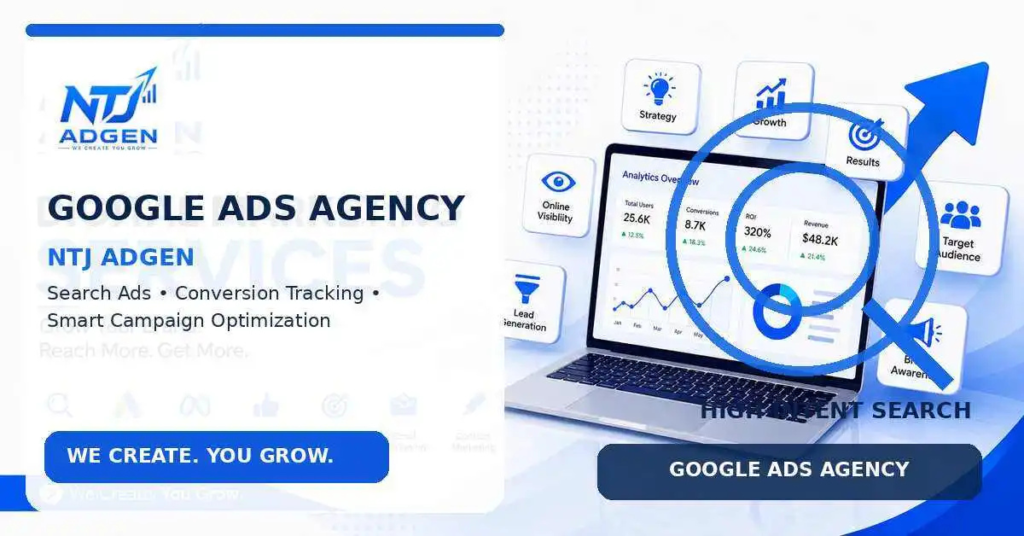
A Google Ads agency plans, builds, manages, and optimizes paid search campaigns on Google’s advertising ecosystem. The work can include keyword research, account structure, ad copy, audience strategy, bidding, budget management, conversion tracking, landing page recommendations, search-term analysis, and performance reporting.
The most important distinction is between buying clicks and buying useful outcomes. A campaign can receive traffic and still perform poorly if keywords have weak intent, landing pages are unclear, tracking is inaccurate, or budgets are allocated to low-value searches. An experienced agency therefore looks beyond impressions and clicks and evaluates conversions, qualified leads, customer acquisition cost, revenue, and return on ad spend where appropriate.
Why Search Intent Matters
Google Ads is powerful because search queries often reveal intent. Someone searching for a general definition is at a different stage of the journey from someone searching for a specific service provider. Campaign structure should reflect these differences.
High-intent commercial terms can be valuable, but they may also be competitive. A strong strategy balances keyword relevance, expected conversion value, competition, budget, and landing-page quality. Negative keywords are also important because they reduce spend on searches that are unlikely to produce useful business outcomes.
Building a High-Performance Campaign
A good Google Ads campaign starts with clear objectives and reliable conversion tracking. Keywords are grouped into logical themes, advertisements match search intent, and landing pages provide a consistent message. Extensions or assets can improve the usefulness of the ad, while bidding strategies should be selected according to the maturity and data available in the account.
Optimization is continuous. Search terms are reviewed, poor-performing queries are excluded, budgets are shifted, ads are tested, and conversion data is analyzed. Changes should be based on evidence rather than random daily adjustments. This creates a more disciplined path toward efficiency.
Google Ads and Landing Pages Must Work Together
Even excellent advertisements cannot compensate for a weak landing page. If the ad promises a service but the landing page is confusing, slow, irrelevant, or difficult to navigate, conversion rates can suffer.
A Google Ads agency should therefore consider the complete journey. The landing page should clearly communicate the offer, demonstrate credibility, answer important questions, and provide a simple next step. Forms, phone numbers, consultation buttons, and other calls to action should be easy to find, especially on mobile devices.
How to Choose the Right Google Ads Agency
Ask potential agencies how they define a conversion, how they track qualified leads, how they manage budgets, and what reporting you will receive. Ask whether you will have visibility into the advertising account and what process they follow for testing and optimization.
Avoid providers that focus only on vanity metrics or promise guaranteed positions and guaranteed sales. Paid search performance depends on market competition, offer quality, landing pages, demand, budget, and many other variables. A strong partner is transparent about these factors and focuses on controllable improvements.
Why NTJ AdGen
NTJ AdGen positions Google Ads as part of a broader performance strategy. Campaign planning can be connected with lead generation, landing-page optimization, SEO, Meta Ads, analytics, and business objectives. This helps avoid a common problem: running paid search without understanding what happens after the click.
The focus is on measurable outcomes and continuous improvement. By combining relevant targeting, persuasive creative, accurate tracking, and data-driven optimization, the goal is to help businesses turn search demand into meaningful enquiries, sales, and growth.
Conclusion
A Google Ads agency can help businesses compete for high-intent searches without relying on trial and error. The real value comes from disciplined account management, accurate measurement, relevant messaging, and continuous optimization.
If paid search is an important part of your growth plan, NTJ AdGen can build a Google Ads strategy around your objectives, audience, budget, and conversion journey. The goal is not simply to generate clicks; it is to create a more efficient path from search to business result.
SEO Metadata
Primary Keyword: Google Ads Agency
Suggested Meta Title: Google Ads Agency | NTJ AdGen
Suggested Meta Description: Learn how a Google Ads agency can improve paid search performance through intent-based keywords, conversion tracking, landing pages and continuous optimization.
Suggested URL Slug: google-ads-agency
Suggested internal links: Digital Marketing Services, Google Ads, Meta Ads, SEO, Lead Generation, Web Design, Contact NTJ AdGen.
Frequently Asked Questions
How much should I spend on Google Ads?
There is no universal budget. It should reflect search demand, average customer value, competition, margins, conversion rates and the amount of data needed for optimization.
How long does Google Ads optimization take?
Campaigns can start collecting data quickly, but meaningful optimization requires enough conversion and search-term information to identify patterns.
Should Google Ads and SEO be used together?
They can complement each other: paid search captures demand immediately while SEO builds organic visibility over time.
Additional Practical Insights
Improving Google Ads Efficiency Over Time
Google Ads performance should be treated as an ongoing optimization process rather than a one-time setup. Search-term reviews can reveal irrelevant queries and new keyword opportunities. Ad testing can identify stronger messages. Bid and budget analysis can show where additional investment may be justified and where spend should be reduced.
Landing-page performance also deserves attention. If a campaign receives relevant traffic but produces few conversions, the solution may not be another keyword change. The offer, page speed, message match, trust signals, form length or call to action may need improvement. A strong Google Ads strategy therefore considers the entire path from query to conversion.
The Importance of Conversion Tracking
Without accurate conversion tracking, campaign optimization becomes guesswork. Businesses should define valuable actions clearly and make sure those actions are recorded consistently. Depending on the business, conversions can include purchases, calls, form submissions, bookings, downloads or qualified enquiries.
Lead quality should also be considered. A campaign that produces many low-quality enquiries may look successful in a platform dashboard while creating little revenue for the sales team. Connecting marketing data with actual business outcomes gives an agency better information for budget allocation and optimization.
A Sustainable Approach to Digital Growth
Sustainable digital growth comes from consistency. Businesses should avoid changing direction every few days based on small fluctuations. Instead, establish a baseline, collect enough information, identify the largest opportunity, make a controlled improvement, and evaluate the result. This process creates institutional learning and makes marketing decisions more confident over time.
Additional Considerations for Long-Term Success
Another advantage of professional Google Ads management is the ability to align campaigns with commercial priorities. Not every conversion has the same value. A request from a high-value business customer may be worth considerably more than a low-intent enquiry, even when both appear as one conversion in a basic report. Campaign strategy can therefore consider lead quality, customer value and the economics of acquisition.
Businesses should also review their Google Ads account regularly as the market changes. Competitors introduce new offers, search behavior shifts, seasonal demand rises and falls, and landing pages evolve. Regular account reviews help identify new opportunities while protecting the budget from irrelevant traffic. A disciplined agency combines platform data with business feedback so that optimization is connected to what is actually happening in the sales pipeline.
Regular review is important because digital marketing is not static. Search behavior, advertising platforms, customer expectations, competitors and technology continue to change. A business that reviews performance, listens to customers and updates its strategy can respond more effectively than one that follows the same plan indefinitely.