Introduction
Digital marketing has become a core growth channel for businesses of every size. Customers now discover brands through search engines, social platforms, paid advertising, websites, reviews, and content before they make a buying decision. That is why choosing the right digital marketing services is no longer simply about posting on social media or running occasional advertisements. Businesses need a connected strategy that turns attention into qualified traffic, leads, customers, and measurable revenue.
What Are Digital Marketing Services?
Digital marketing services are professional activities that help businesses attract, engage, convert, and retain customers through online channels. Depending on the business, the service mix can include SEO, Google Ads, Meta Ads, social media marketing, content marketing, email marketing, lead generation, website optimization, conversion rate optimization, analytics, and performance marketing. The right combination depends on the audience and the commercial objective rather than on a fixed package.
A good provider begins with discovery. It looks at the company’s products, market, competitors, customer journey, existing website, historical campaign data, budget, and growth targets. This information helps determine which channels should be prioritized and how success should be measured. For example, a local service business may need local SEO and lead generation, while an eCommerce brand may place greater emphasis on shopping campaigns, Meta advertising, creative testing, and conversion optimization.
Core Digital Marketing Services Businesses Need
SEO can build long-term organic visibility by improving technical foundations, content quality, keyword relevance, internal linking, and authority. Paid search can capture high-intent demand through Google Ads. Meta advertising can create demand, reach specific audiences, and support retargeting across Facebook and Instagram. Social media marketing can strengthen brand familiarity and community engagement.
Content marketing supports almost every channel because useful content can answer questions, demonstrate expertise, and support both search visibility and sales conversations. Lead generation connects marketing activity with a measurable commercial action, such as a form submission, call, consultation, or quotation request. Analytics and conversion tracking then provide the evidence needed to understand which activities are contributing to results.
Why an Integrated Strategy Matters
Customers rarely move through a perfectly linear journey. Someone may discover a brand through social media, search for reviews later, visit the website, leave without converting, and return after seeing a remarketing advertisement. An integrated strategy allows these touchpoints to work together.
For example, SEO can capture existing demand while paid search captures urgent intent. Social content can build trust, while Meta retargeting brings visitors back. A conversion-focused website can turn this traffic into leads. Reporting then connects the activity to business metrics. This approach is more useful than judging each channel in isolation.
How to Choose a Digital Marketing Partner
Look for a provider that asks detailed questions before recommending a campaign. Ask how goals will be defined, which metrics will be reported, how budgets will be managed, what tracking will be installed, and how often campaigns will be optimized. A credible agency should explain assumptions and limitations instead of guaranteeing unrealistic outcomes.
Case studies can be useful, but businesses should also examine whether the examples are relevant to their industry, audience, budget, and sales cycle. Communication matters as much as technical expertise because digital marketing requires regular decisions and experimentation.
Why NTJ AdGen
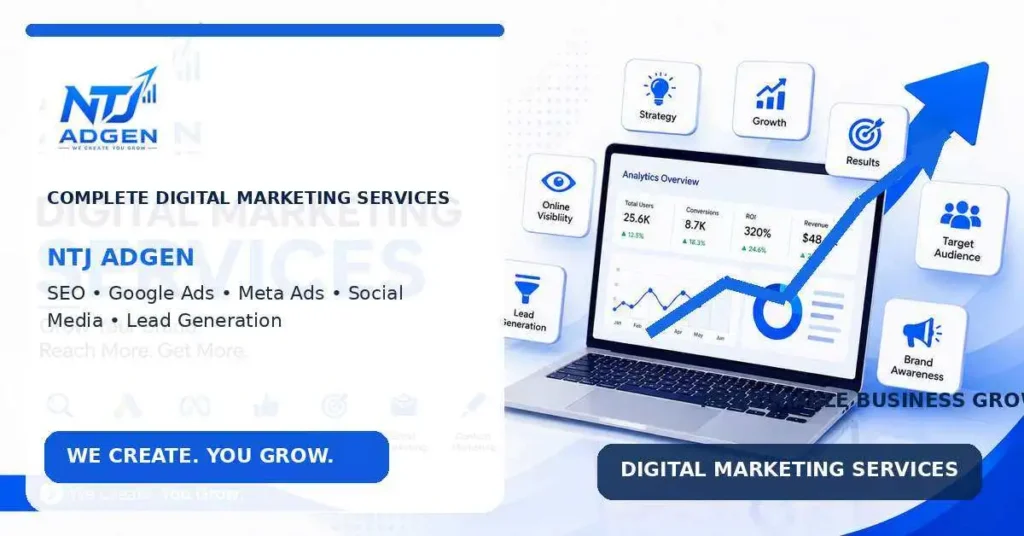
NTJ https://ntjadgen.com/ approaches digital marketing around strategy, performance, and measurable growth. Its service philosophy connects SEO, Google Ads, Meta Ads, social media, lead generation, content, and website requirements instead of treating them as isolated tasks. The aim is to build campaigns around the audience, business objective, available budget, and measurable outcomes.
The brand promise, “We Create. You Grow.” reflects a practical approach: create relevant strategies and assets, measure their impact, learn from the data, and continuously improve. For businesses looking for a structured digital marketing partner, this approach can provide a clearer path from online visibility to business growth.
Conclusion
The right digital marketing services can help a business become easier to discover, more credible to prospects, and more efficient at turning attention into customers. Success does not come from using every channel at once. It comes from choosing the right channels, building strong foundations, tracking meaningful outcomes, and optimizing consistently.
If your business needs a more structured approach to online growth, NTJ AdGen can help create a strategy around your goals, audience, and budget. With a performance-focused mindset, the objective is simple: build digital activity that contributes to real business results.
SEO Metadata
Primary Keyword: Digital Marketing Services
Suggested Meta Title: Complete Digital Marketing Services | NTJ AdGen
Suggested Meta Description: Explore digital marketing services that combine SEO, Google Ads, Meta Ads, social media and lead generation to drive measurable business growth with NTJ AdGen.
Suggested URL Slug: digital-marketing-services
Suggested internal links: Digital Marketing Services, Google Ads, Meta Ads, SEO, Lead Generation, Web Design, Contact NTJ AdGen.
Frequently Asked Questions
Which digital marketing service should a business start with?
Start with the channel most closely connected to your customer journey and immediate objective. Many businesses combine SEO for long-term visibility with paid media for faster demand capture.
How long does digital marketing take to show results?
Paid campaigns can generate data quickly, while SEO and content generally require a longer period of consistent optimization. Results vary by market, competition, offer, budget, and execution.
How should digital marketing success be measured?
Use business outcomes such as qualified leads, sales, revenue, customer acquisition cost, conversion rate and return on advertising spend where relevant.
Additional Practical Insights
Building a Practical Digital Marketing Funnel
A strong digital marketing plan usually works across several stages of the customer journey. At the awareness stage, useful content, social media and display or video campaigns can introduce the brand. At the consideration stage, SEO content, case studies, service pages, reviews and comparison information can answer questions and build trust. At the conversion stage, Google Ads, Meta retargeting, landing pages and clear calls to action can encourage the prospect to enquire or purchase.
After conversion, email, remarketing, customer support and useful content can help improve retention. Thinking in terms of a funnel makes it easier to identify gaps. If traffic is strong but enquiries are weak, the problem may be conversion. If conversions are good but lead quality is poor, targeting or qualification may need attention.
The Role of Analytics in Digital Marketing
https://ntjadgen.com/ turns marketing activity into information that can guide decisions. Businesses can monitor where users come from, which pages they visit, which campaigns produce conversions, and where visitors leave the journey. Proper conversion tracking is particularly important because it helps marketers connect advertising spend with outcomes.
Businesses should also avoid measuring everything equally. A metric is useful when it helps answer a business question. For example, cost per qualified lead may be more valuable than total clicks for a B2B service, while revenue and repeat purchase rate may matter more for eCommerce. The right dashboard depends on the business model and objectives.
A Sustainable Approach to Digital Growth
Sustainable digital growth comes from consistency. Businesses should avoid changing direction every few days based on small fluctuations. Instead, establish a baseline, collect enough information, identify the largest opportunity, make a controlled improvement, and evaluate the result. This process creates institutional learning and makes marketing decisions more confident over time.